
I’m a big fan of using equipment in ways it wouldn’t have been used to solve a problem, and today’s post is an example of that.
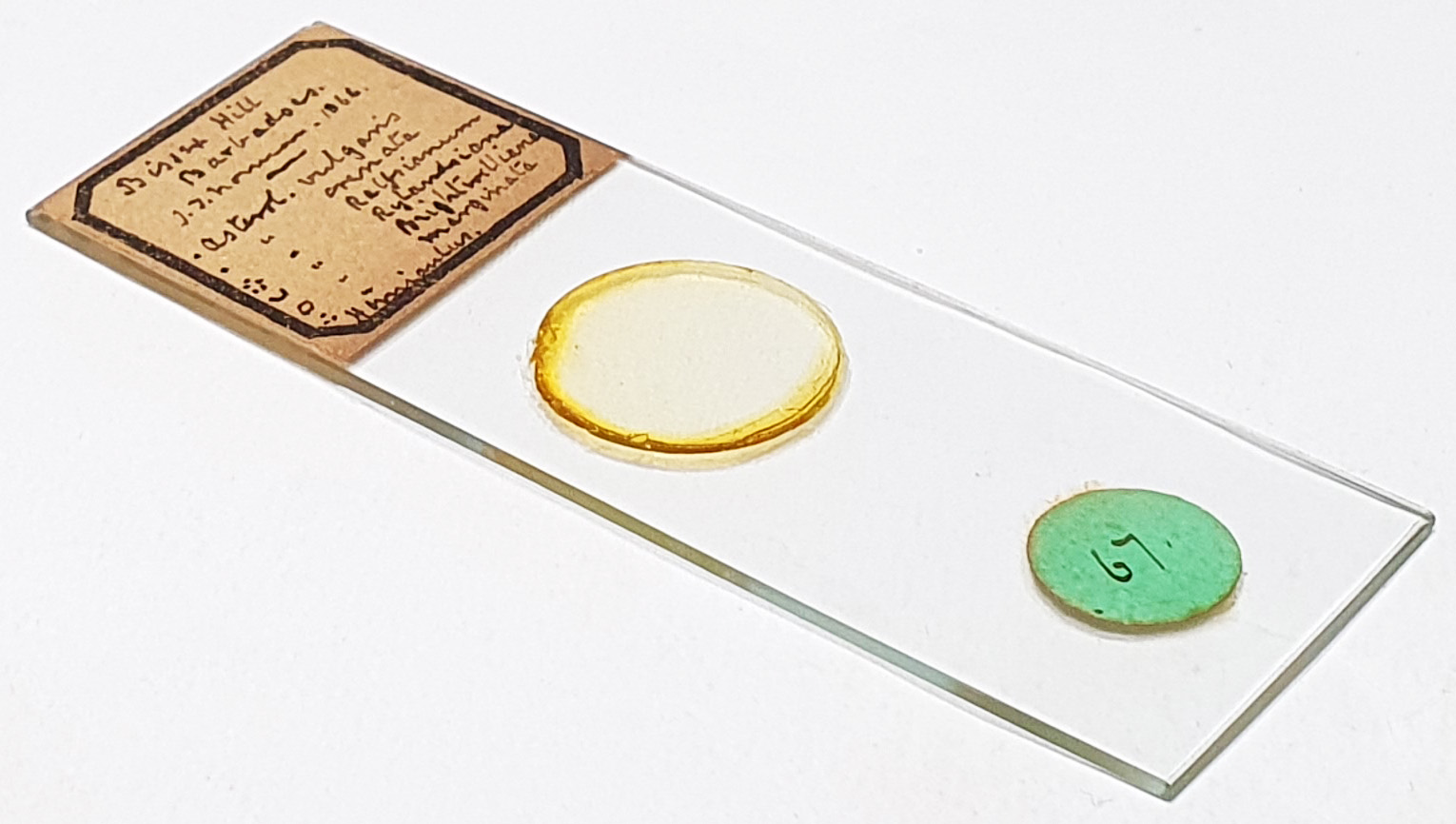
For background, I have a nice microscope diatom strew slide from Bissex Hill, Barbados, which was prepared by JT Norman in 1866. Lovely slide, lost of species, a great to look at. However it has a problem. The coverslip seems to be very thick and/or the diatoms are mounted very deep. As such my usual ‘go to’ high magnification objectives (40x and 63x Leitz Pl Apo oil immersion ones), can’t be used as they do not have enough working distance. A few weeks ago I tried using a 50x Leitz Fluoreszenz NA 1.00 water immersion objective which has a working distance of 0.68mm, and I was just able to get some images. However they weren’t great. My thought was that if the coverslip is the main ‘thickness’ issue, the refractive index of the glass would be very different to that of the water the objective was expecting and I would get aberrations as a result. What I needed was a long working distance, oil immersion objective, with high NA and high magnification. I did try a 63x Zeiss Neofluar NA 1.25 oil immersion objective, which has a working distance of 0.65mm and it was just not quite a long enough working distance to be usable (makes you realise how deep these diatoms are).
I then had a bit of sit down and think, and remembered I had a 53x Leitz Ks Fl objective, which is NA 0.95 (relatively high) and oil immersion, and was designed to look at photographic emulsions up to about 1mm thick. Oil immersion, high NA, and an enormous working distance. Woo hoo. Only problems – it is 170m tube length and my microscope is 160mm tube length, and it is a short barrel objective, so the wrong parfocal length to my normal ones. The tube length issue is not ideal, but not a deal breaker – I’ve used high magnification 170mm tube length objectives before on my microscope. The wrong parfocal length is also not a huge issue, as a I have a Plezy Flu adapter from Leitz to allow short parfocal length objectives to be used on long parfocal length setups.
My thoughts with this was the as the objective was designed for use on photographic emulsions (including on glass) between 0.07 and 1.07mm thick, and with oil immersion, if it is a thick coverslip (which is glass with a refractive index similar to immersion oil) then ‘thick layer of oil’ would be not too dissimilar to ‘small amount of oil and thick glass coverslip’. So I set it up and tried it out, and below are a couple of examples of what it imaged.
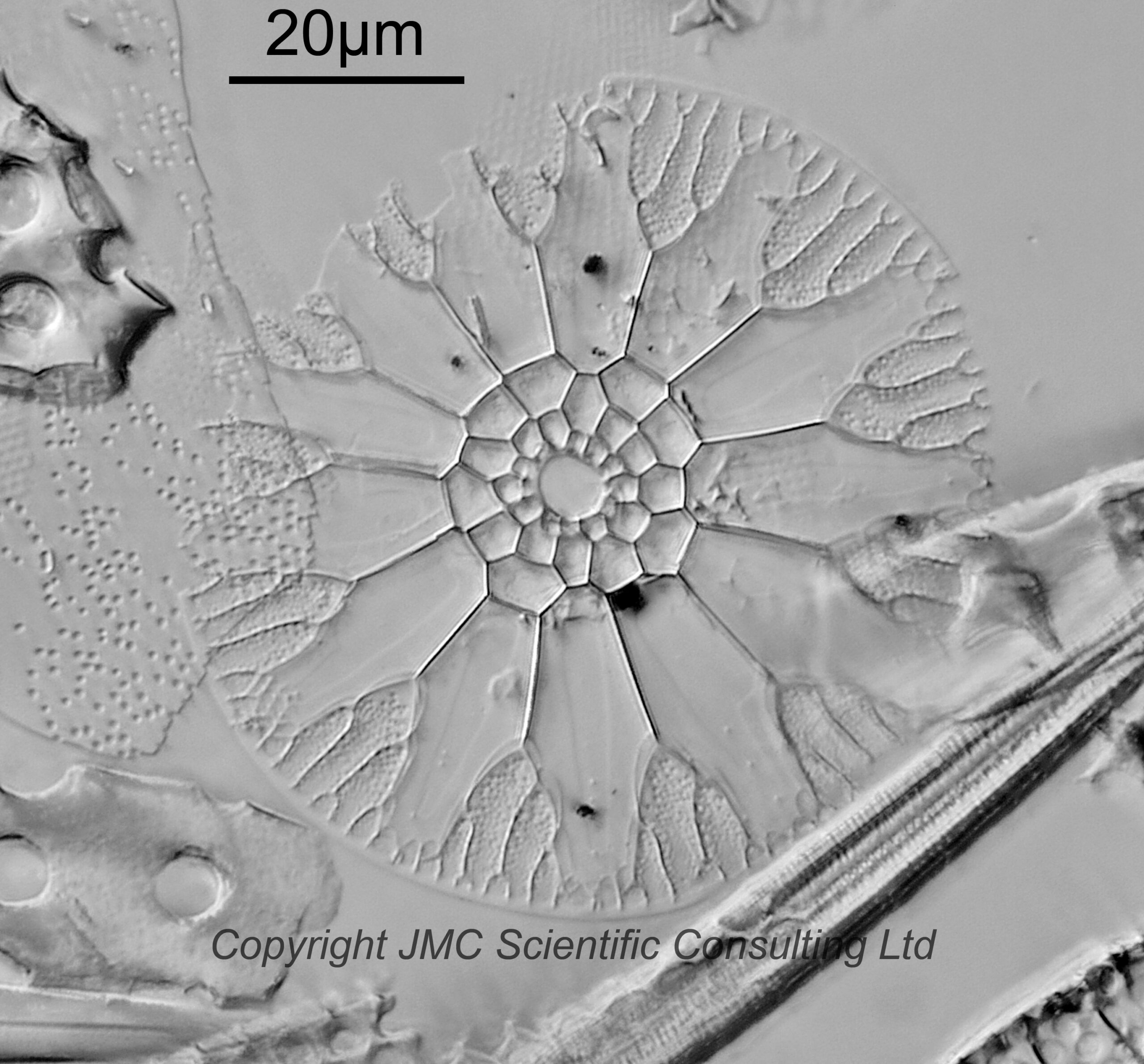
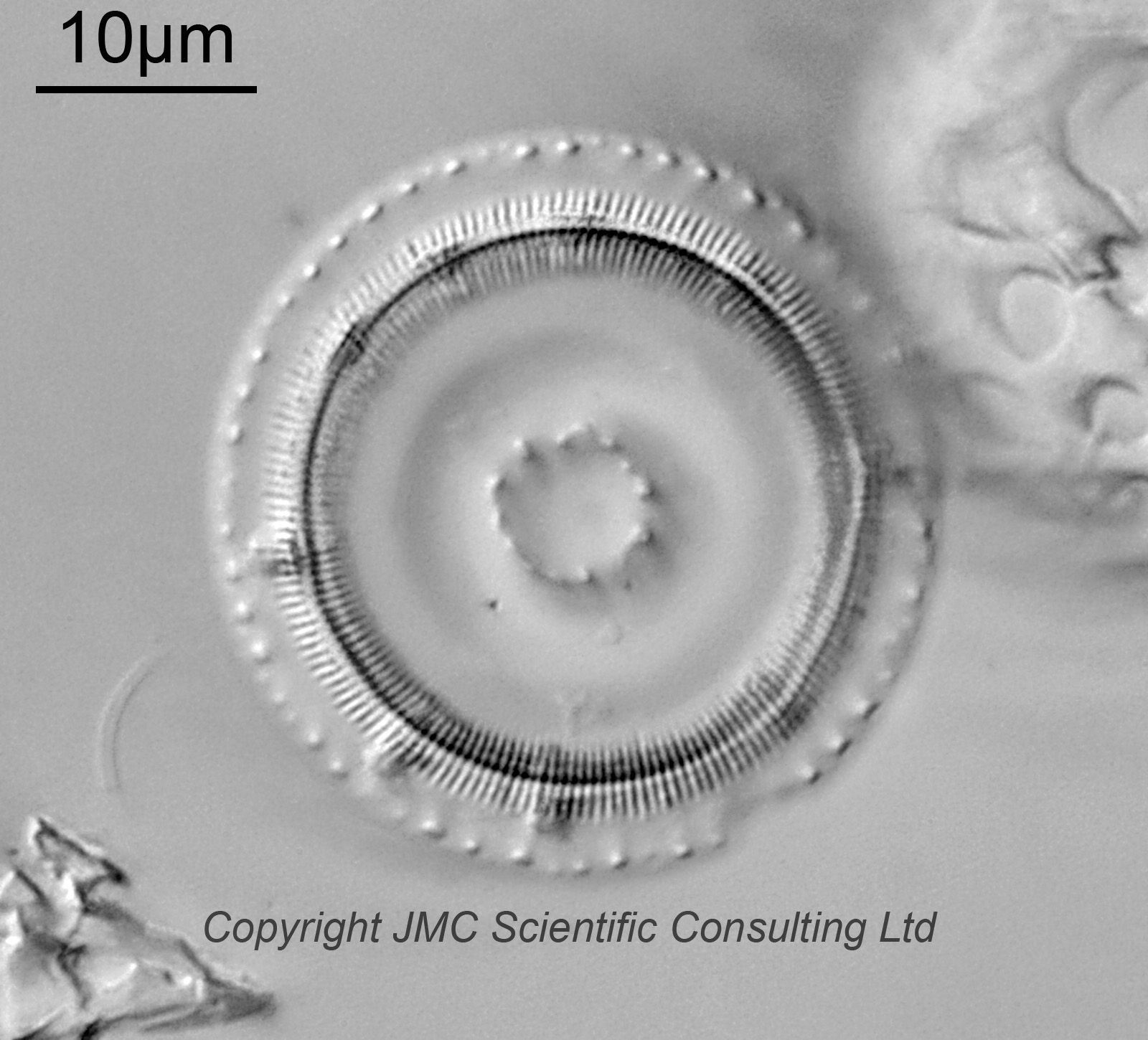
Overall I was very happy with the image quality. They were better than the 50x Leitz water immersion Fluoreszenz objective I had tried before. For some more images and (the original water immersion images) see the post on my online diatom museum here.
Some images of the objective and adapter.
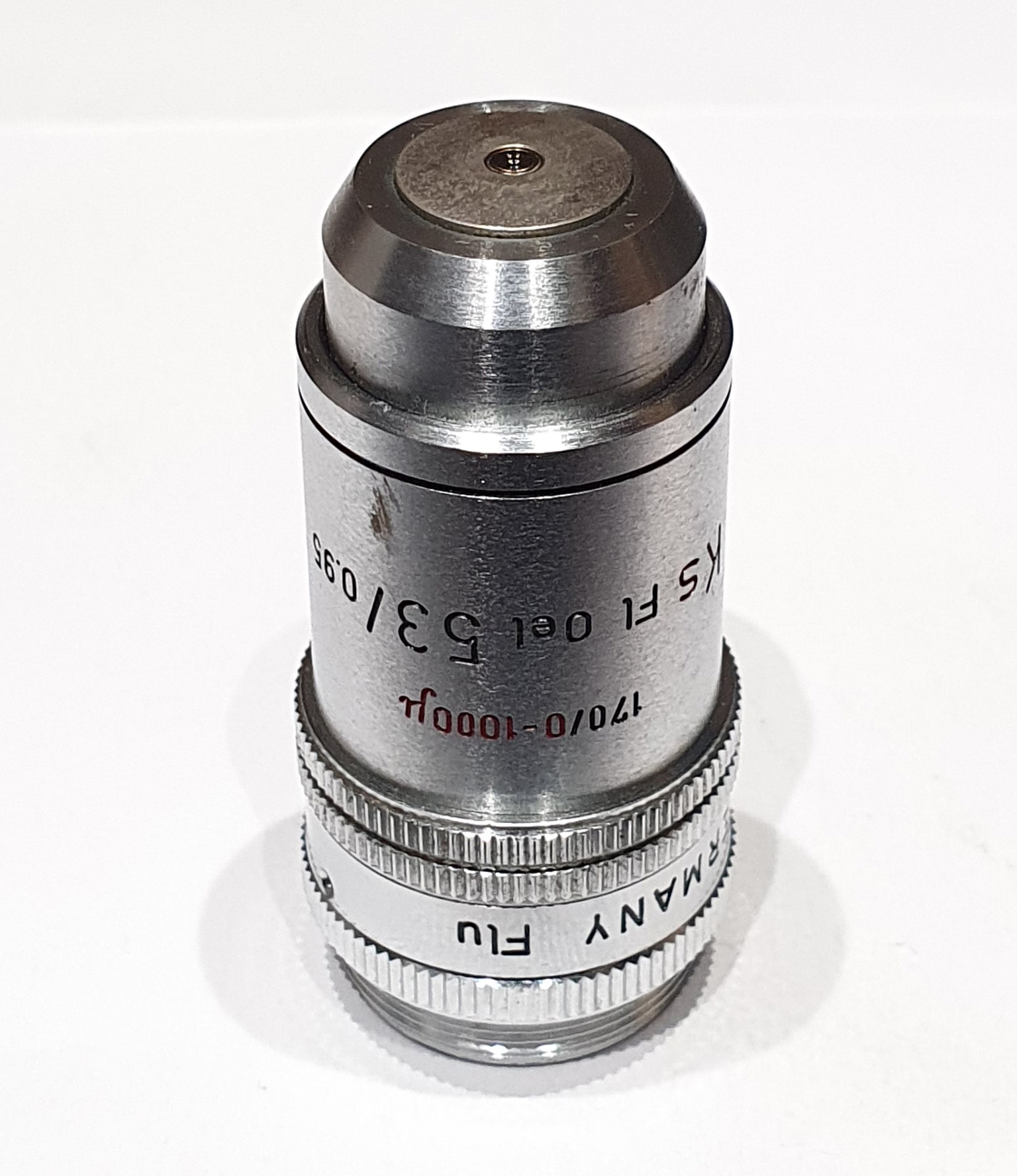
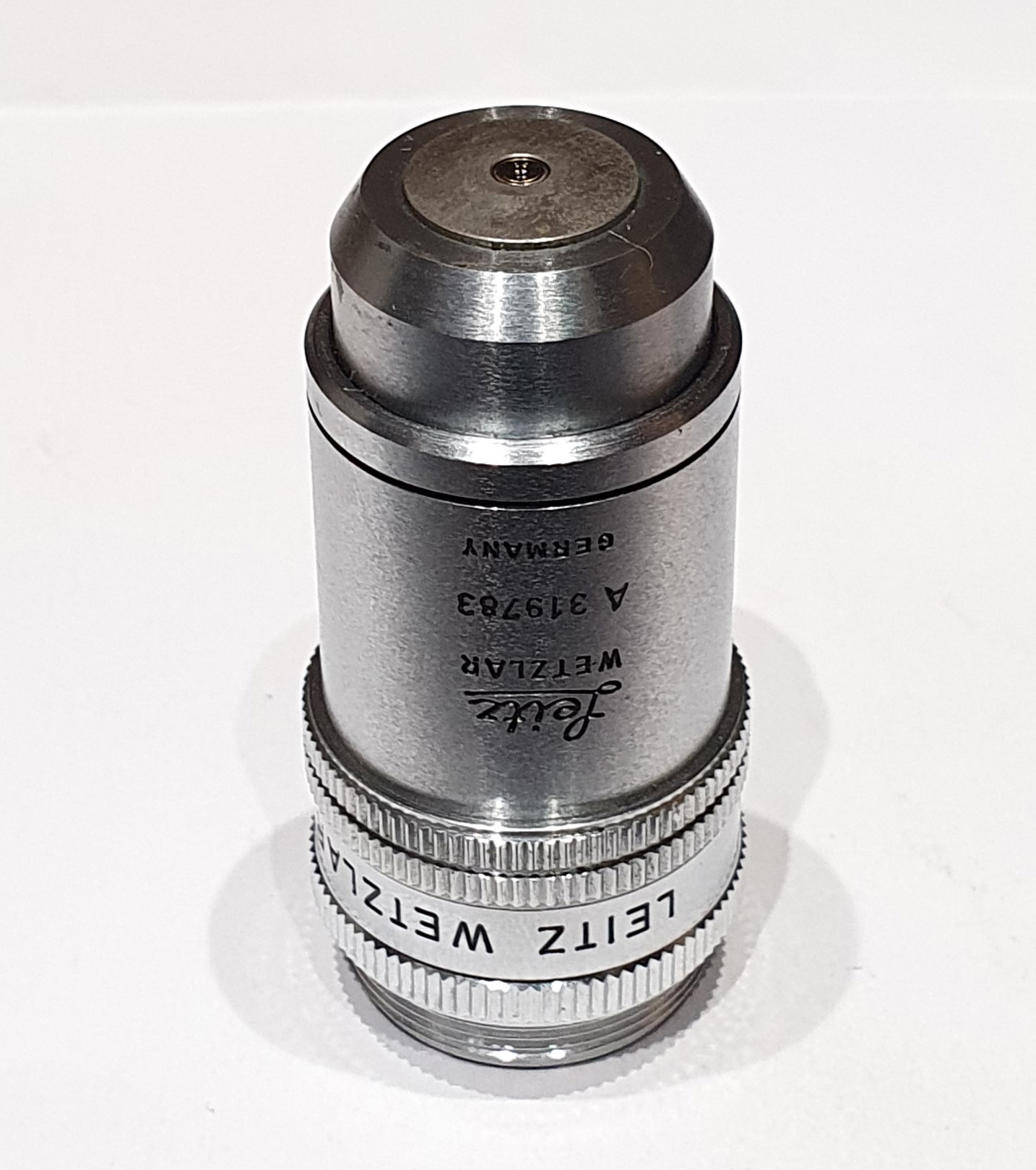
I’ve written a bit about the Leitz Ks objectives here.
Below is an image of a 100 micron scale bar (from Graticules Ltd) taken with the objective on my setup. It is the full image frame, but reduced in resolution for sharing here.
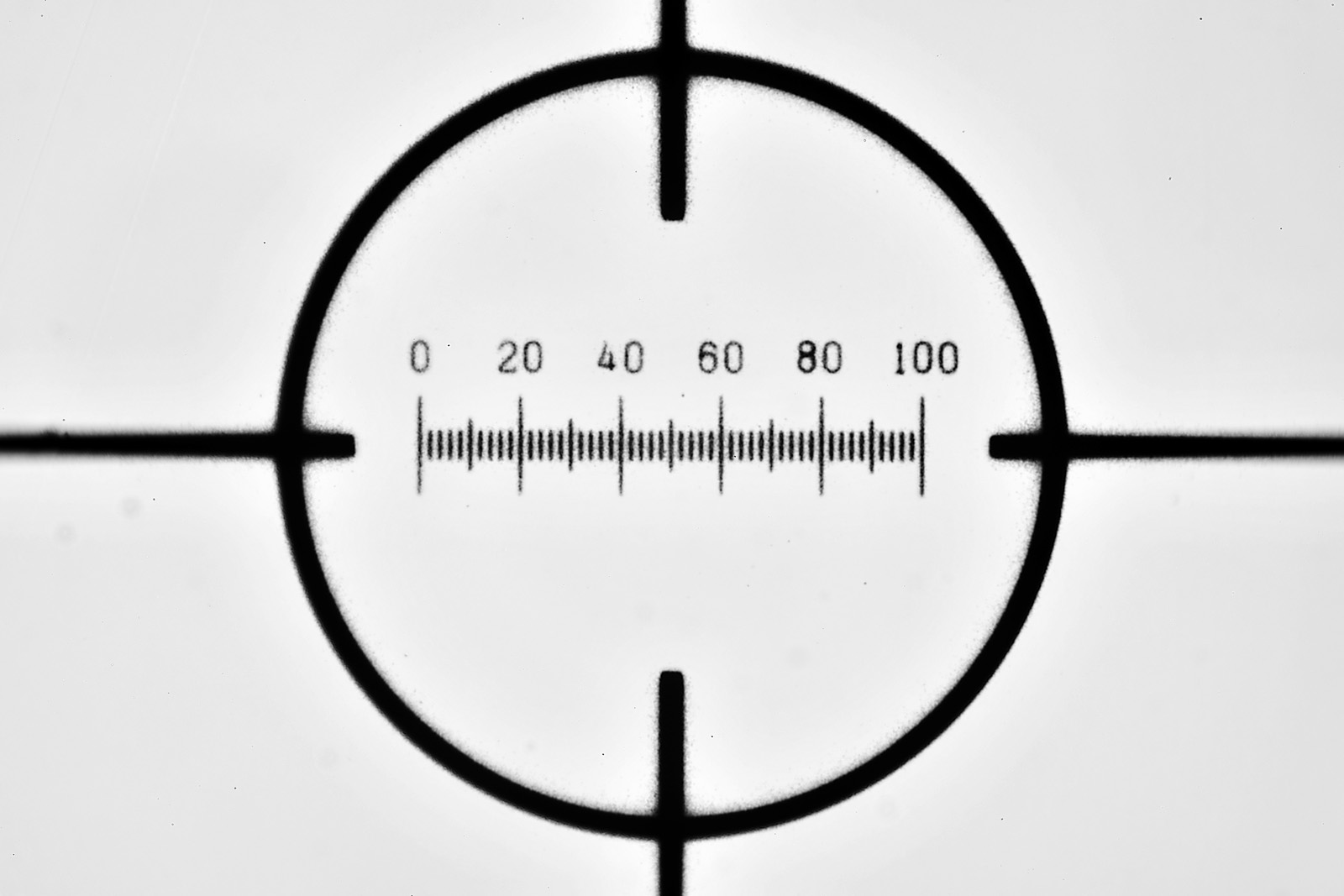
Image quality is very good, especially in the middle of the image, although it does drop off at the extreme left and right which is not a huge surprise.
Before I wrap this post up, here is a picture of the slide from Bissex Hill, Barbados.
Sometimes imaging (like many scientific areas) is a problem solving challenge and it becomes important to think laterally about a an issue. This is something I love doing, and especially if I can use something outside of what it was originally designed for to get a result. As always, thanks for reading, and if you’d like to know more about my work I can be reached here.